

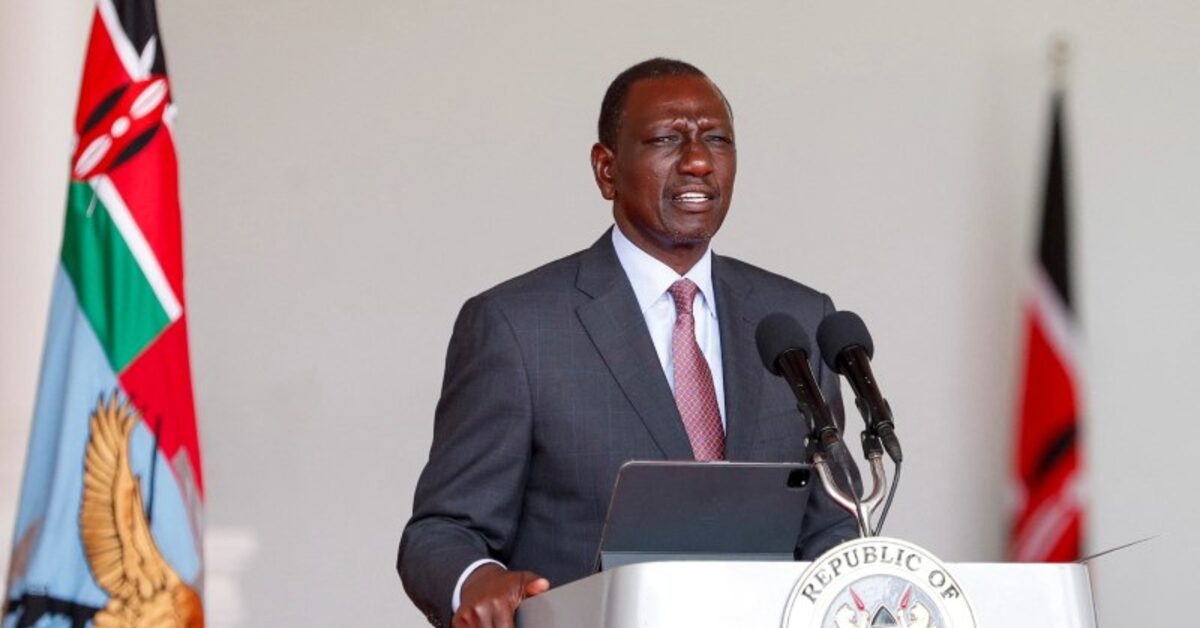
President William Ruto has defended his controversial remarks ordering police to shoot protesters in the leg, insisting that his stance aligns with the law and is aimed at protecting public safety. Speaking in an interview with Al Jazeera published on Sunday, Ruto dismissed accusations that his administration is using security agencies to suppress dissent.
“I do not regret those comments at all because the law allows the police to use force when other people’s lives are in danger. The police know what they need to do and understand what is in their purview,” Ruto said. He emphasized that his instructions were meant to ensure the police safeguard both protesters’ rights and the lives and property of innocent citizens.
Ruto also clarified that the National Police Service (NPS) operates independently. He noted that his earlier comments were an expression of his stance on maintaining order, not formal directives. “The police are independent, and there is nowhere in the law where I have the power to direct the police,” he explained.
The President addressed criticism from the media and human rights groups, which labelled his government as rogue for its handling of protests. “The media are independent, and they write whatever they think they can write. They say all manner of things which I do not agree with, but they have a right to say them,” he said.
On reports of police misconduct, including the death of teacher and activist Albert Ojawang, Ruto reaffirmed his commitment to accountability within the police force. “We have thousands of police officers, and you cannot miss a rogue one. That is why we have laws to deal with such elements. We will continue to make sure that the majority of the police know what to do,” he stated.
Ruto’s initial remarks in July, during the launch of the Police Housing Project in Kilimani, sparked nationwide debate. He had warned that anyone storming businesses or police stations should be shot in the leg before facing court proceedings—a comment that drew both condemnation from human rights groups and support from those seeking stronger law enforcement.
