

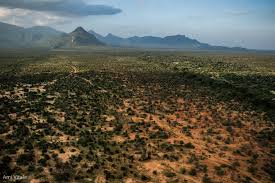
The journey to Merti, a remote subcounty in Isiolo, is long and rugged a reflection of the struggle facing its people. For the pastoralist communities of Merti, Cherab, and Chari, land is more than just territory; it represents grazing rights, water access, and identity. Yet today, it has become the center of a complex dispute involving conservation, carbon credits, and questions of consent.
In January, the Environment and Land Court delivered a landmark ruling declaring that the Northern Rangelands Trust (NRT) had unlawfully established conservancies in Cherab and Chari wards. The judges Oscar Angote, Charles Yano, and Christopher Nzili found that the trust had failed to involve the community or the relevant government bodies in public participation. They issued a permanent injunction barring NRT from running the conservancies.
However, in June, the Court of Appeal stayed the decision, allowing NRT to continue its operations. The case, filed by Abdirahman Osman and 164 other residents, reflects deeper divisions within the community some see conservancies as a pathway to jobs and infrastructure, while others view them as a threat to traditional livelihoods.
At the heart of the issue lies land ownership. Roba Wako, chair of the Cherab Dhedah Community Land, said the community cannot obtain a title deed without government support for surveying and demarcation. “We registered our land, but the process stalled due to costs,” he said.
Faith Alubbe, CEO of the Kenya Land Alliance, emphasized that while the Community Land Act of 2016 was a step forward, implementing it remains costly and complex.
As carbon markets expand, Isiolo’s experience underscores a national dilemma: balancing the lure of green finance with genuine community consent and legal empowerment.
