

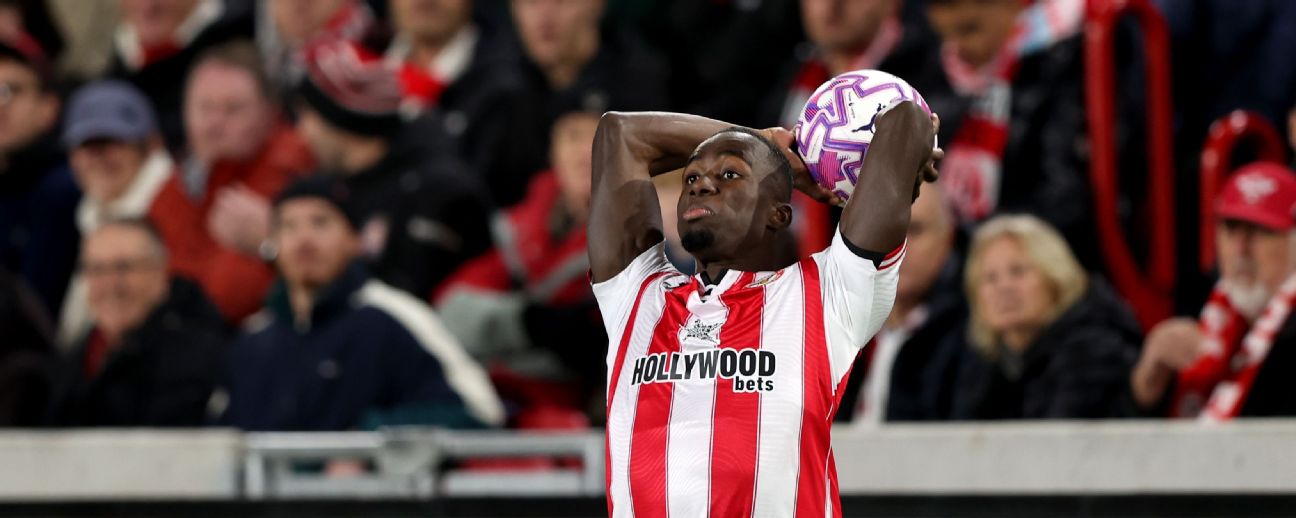
Football’s governing body, the International Football Association Board (Ifab), is exploring the introduction of a time limit for throw-ins following a noticeable rise in long throw-ins in the Premier League. The trend has significantly impacted in-play time, prompting discussions on how to counteract its effects.
Long throw-ins, which often take longer to execute than regular throws, have surged this season, with Premier League statistics revealing more than twice as many long throws compared to the previous season. This has contributed to a reduction in the overall time the ball is actively in play, a key concern for the game’s administrators who aim to maximize match efficiency.
The long throw-in trend often involves extensive preparation, similar to that of attacking free-kicks. This extended process can result in delays, ultimately reducing the time the game is in motion. With the introduction of new regulations this season limiting goalkeepers’ time to release the ball, there is now a proposal to implement similar restrictions on throw-ins.
Currently, if a goalkeeper fails to release the ball within eight seconds, a corner is awarded. This time limit is signaled by the referee using hand gestures to ensure clarity. Ifab’s advisory panels have discussed extending such protocols to throw-ins and goal kicks to ensure that these moments don’t drag on, thus increasing overall playtime.
Alongside the time limit discussion, Ifab has also revisited other football regulations. One consideration is expanding the role of the Video Assistant Referee (VAR), allowing officials to intervene if a second yellow card is awarded in error, a protocol currently not within VAR’s remit. The potential amendment could improve decision-making, reducing instances of unjust penalties that disrupt match flow.
Furthermore, Ifab is deliberating over adjustments to the offside rule. There is growing interest in examining whether the primary goal of the offside law should shift toward minimizing marginal offside calls to foster more attacking play. This move could lead to more dynamic and offensive football, enhancing the viewing experience.
These rule changes and considerations will be formally addressed at Ifab’s annual business meeting in London in January. While any decisions are still pending, the aim is clear: to ensure that football remains fast-paced and entertaining by minimizing delays caused by tactical trends like long throw-ins.
