

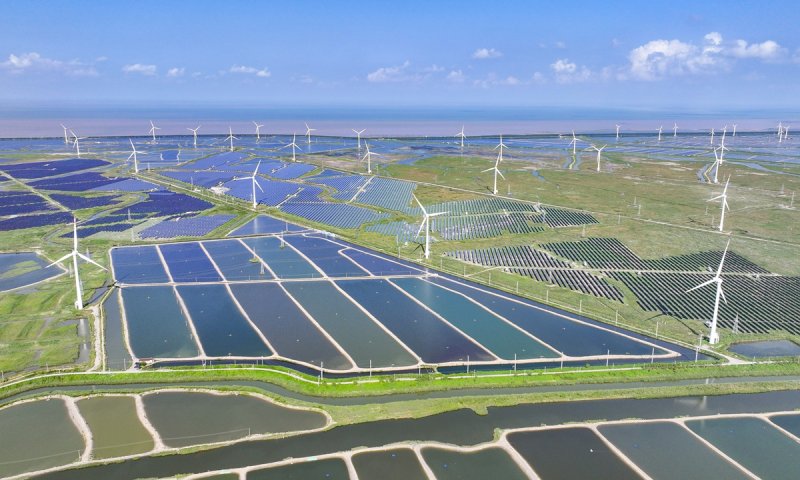
China has solidified its position as the world’s leading exporter of clean energy technologies, with exports valued at nearly $1 trillion since 2018. The nation’s dominance spans key sectors including batteries, solar components, electric vehicles (EVs), and grid technologies, according to a new industry report released this week.
China’s Expanding Grip on Global Clean Energy Supply Chains
The report, featuring a comprehensive map of international trade flows, highlights China’s unparalleled reach across the green energy supply chain — from raw materials and production to final distribution. It shows that Chinese-made solar panels and lithium-ion batteries now account for over 70% of global exports in their respective sectors, while EV exports have surged dramatically since 2022.
“China has effectively positioned itself as the backbone of the global clean energy economy,” said Dr. Mei Lin, a senior analyst at the Global Energy Policy Institute. “Its scale, supply chain integration, and investment in innovation have created a competitive edge that other nations are only beginning to address.”
Four Key Sectors Driving China’s Clean Energy Export Boom
The report identifies four core industries that have powered China’s ascent in the clean energy market:
- Battery Technology: China leads the world in lithium-ion battery production, exporting billions in EV and storage batteries annually, largely driven by CATL and BYD.
- Solar Components: Chinese manufacturers dominate photovoltaic (PV) module exports, supplying renewable infrastructure across Europe, Asia, and Africa.
- Electric Vehicles (EVs): China’s EV exports have tripled since 2020, with major players like BYD and SAIC Motor expanding aggressively into global markets.
- Grid and Power Technologies: Exports of smart meters, advanced transformers, and ultra-high-voltage (UHV) transmission systems are helping to modernize power grids worldwide.
Global Demand and Market Reach
The analysis identifies Europe and Southeast Asia as China’s largest clean energy export destinations. Growing demand for affordable renewable solutions amid global net-zero targets has positioned Chinese manufacturers as indispensable suppliers for developing and developed economies alike.
Rising Concerns Over Supply Chain Dependence
Despite the clear environmental benefits, China’s dominance has sparked debate among policymakers, particularly in the U.S. and Europe. Western leaders are increasingly wary of overreliance on Chinese supply chains, prompting new industrial and subsidy programs to strengthen domestic production of clean energy components.
“While China’s leadership in clean energy manufacturing has accelerated global adoption, it also raises strategic questions about supply security and technological sovereignty,” said Elena García, an energy economist with the European Green Alliance.
China’s Clean Energy Future
The report concludes that China’s global leadership in clean technology exports is unlikely to fade soon. With continued investment in research and development, mineral processing, and manufacturing efficiency, analysts project that by 2030, China could account for more than 60% of global clean energy technology exports.
As the world intensifies its push toward decarbonization, China’s commanding role in clean energy trade continues to reshape economic and geopolitical landscapes, establishing the nation as the central force driving the global green transition.
