

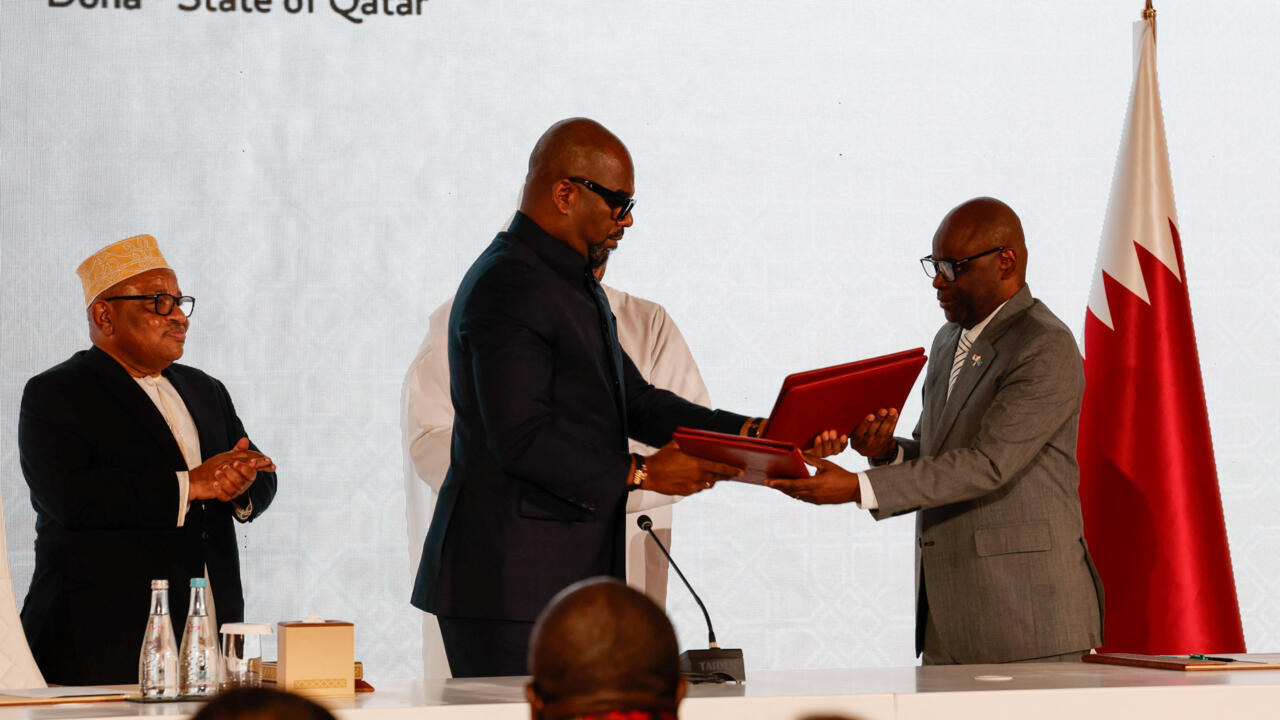
DR Congo’s government and the Rwanda-backed M23 rebel group have signed a new framework for peace in Qatar, marking the latest attempt to halt decades of unrest in the resource-rich eastern region. Qatar, together with the United States and the African Union, has been leading mediation efforts aimed at addressing one of Africa’s most persistent and deadly conflicts.
The agreement comes at a critical time. Earlier this year, M23 fighters captured major eastern cities including Goma and Bukavu, as well as two key airports—events that significantly escalated the conflict and displaced hundreds of thousands. Since January, thousands of civilians have been killed as fighting intensified.
US Africa envoy Massad Boulos described the newly signed document as containing eight protocols, though he acknowledged that substantial work remains. Progress on prisoner exchanges and ceasefire monitoring has been slower than anticipated, raising concerns about implementation.
A central sticking point remains the question of foreign troop presence. Kinshasa is insisting on the complete withdrawal of Rwandan troops, accusing Kigali of backing the M23. Rwanda denies the accusations, arguing that its troops are only positioned defensively and calling for the disbandment of the FDLR, a Congo-based militia with links to the 1994 Rwandan genocide.
The new framework also highlights crucial humanitarian priorities, including safe access for aid agencies, protection of the judiciary, and the return of displaced families. According to AFP, the document builds on two previous agreements signed in Doha—one outlining principles in July, and another on ceasefire monitoring last month.
This marks the latest effort after a Washington-brokered peace deal in June, which was described by former US President Donald Trump as “a glorious triumph” but was swiftly violated. Notably, M23 was not a direct party to that agreement and has consistently preferred Qatar-led talks, which it says address the “root causes” of the conflict.
With eastern DR Congo rich in minerals vital to global tech industries, the stakes remain high. While the Qatar framework offers renewed hope, its success will depend on genuine commitment from all sides to silence the guns and prioritize peace.
